Articles

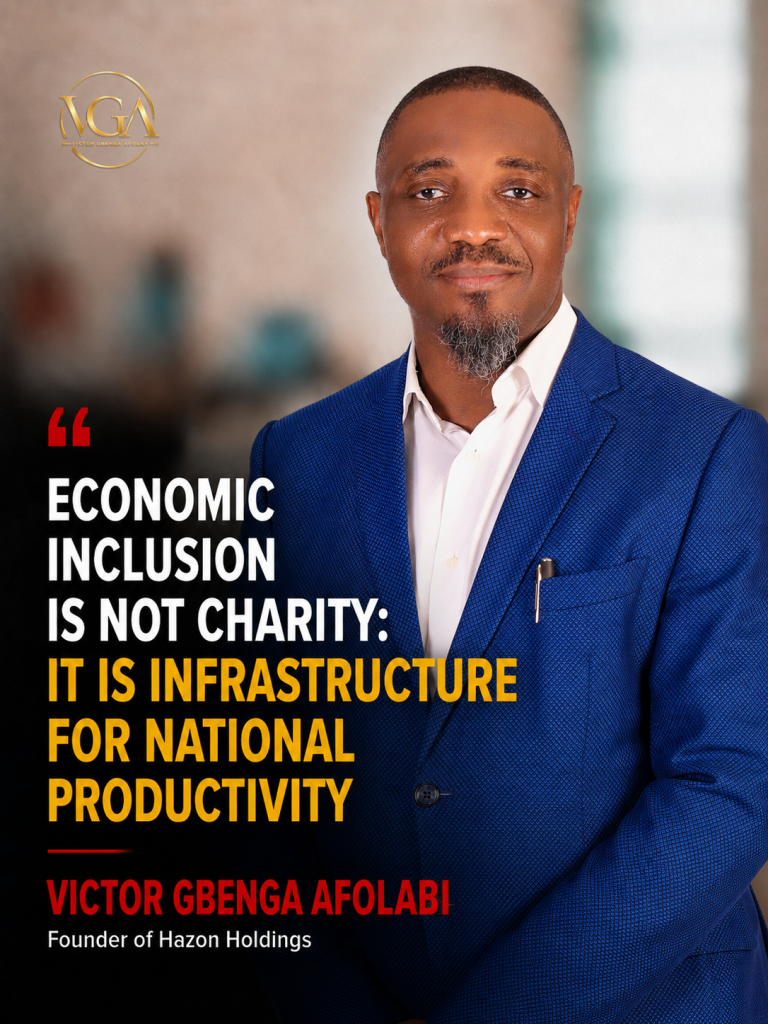
Economic Inclusion Is Not Charity: It Is Infrastructure for National Productivity

Economic inclusion is often discussed as a social intervention. In many policy conversations, it is treated as a welfare response to poverty or a moral obligation to support vulnerable populations. While this interpretation is not incorrect, it is incomplete. (https://www.econstor.eu/bitstream/10419/71821/1/736729240.pdf). At its core, economic inclusion is a productivity system. According to (Ranieri & Ramos, 2016; Timilsina et al., 2020), economic inclusion is when individuals and businesses have access to finance, skills, markets, jobs, and digital tools, they do not merely receive support; they become active contributors to national productivity. It determines how effectively a nation converts human potential into economic output. A country’s output is not shaped only by large corporations or government spending. It is also shaped by how many people are able to participate meaningfully in economic activity. Economic inclusion, therefore, is not charity. It is infrastructure (Aschauer, 1989; Timilsina et al., 2020).

Economic Inclusion as a Productivity System Economic inclusion refers to the ability of individuals, households, and businesses to access the systems required to participate in the economy (Ranieri & Ramos, 2016; Timilsina et al., 2020). These include financial services, education, skills, infrastructure, employment pathways, digital tools, and market access (https://www.econstor.eu/bitstream/10419/71821/1/736729240.pdf).
When these systems are absent, productive capacity remains dormant. A skilled worker without access to employment channels, credit, or digital infrastructure is not unemployed in isolation; they represent unused economic capacity. A small business without access to finance or distribution is not simply constrained; it is structurally underperforming (Shrestha & Bhattarai, 2025; Timilsina et al., 2020). Exclusion creates inefficiency across the system (Calderón & Servén, 2010; Cali & Mulder, 2025). It reduces income generation, limits enterprise growth, weakens demand, and slows innovation. Inclusion reverses this by expanding participation and increasing the number of active economic agents within the system. In this sense, economic inclusion is not a programme. It is an operating system for productivity.

Why Charity Cannot Replace Economic Infrastructure
Charity responds to immediate need. Economic inclusion addresses structural limitation. This distinction is critical. A welfare intervention may temporarily stabilize a household. However, it does not necessarily change the underlying economic position of that household (Timilsina et al., 2020).
Inclusion, on the other hand, aims to shift individuals from dependency to participation, and from participation to productivity. Charity is consumption-based. Economic inclusion is production-based. The objective of inclusion is not only to support people but to enable them to create value. That includes earning income, building enterprises, participating in markets, and contributing to economic output. Countries that rely solely on welfare approaches often experience recurring cycles of dependency. Countries that embed inclusion into economic infrastructure reduce long-term pressure on social systems by expanding the productive base of the economy.

Access to Finance Converts Activity Into Scale Finance is one of the most important channels of economic inclusion because it determines scale (Shrestha & Bhattarai, 2025; Timilsina et al., 2020). Many individuals already participate in economic activity but remain constrained by lack of capital. Traders cannot expand inventory. Farmers cannot invest in inputs. Small manufacturers cannot upgrade equipment. Entrepreneurs cannot scale viable ideas. Access to finance is not only a financial service issue; it is a productivity issue. When productive actors can access appropriate financial tools, they are better positioned to invest, expand operations, increase output, and participate in larger markets (https://openknowledge.worldbank.org/entities/publication/bfb41300-6823-575a-bbb1-4cec6b9bd8bf). When finance is structured properly, it becomes a multiplier. It converts existing effort into expanded output. However, it must be linked to productive activity rather than consumption alone. Otherwise, it increases financial pressure rather than economic value. Financial inclusion, therefore, is not simply about account ownership. It is about enabling economic actors to grow their productive capacity (Chen & Li, 2022; Shrestha & Bhattarai, 2025).

Skills Development Must Connect to Economic Demand Skills are central to inclusion, but only when they are connected to market realities. Training that is disconnected from economic demand produces certification without absorption. This creates a mismatch between capability and opportunity (Ranieri & Ramos, 2016; Timilsina et al., 2020). A productive skills system begins with understanding economic needs. What sectors are growing? What capabilities are required? Where are the gaps between education and employment? Skills become economically meaningful when they are connected to jobs, enterprise, and income pathways. Without this connection, skills remain theoretical rather than productive. Inclusion through skills is therefore not about training volume. It is about alignment between capability and economic demand (Chen & Li, 2022; Timilsina et al., 2020). Skills development contributes most effectively to economic growth when it aligns with labour market demand and productivity needs. Inclusion requires not only expanding access to skills but ensuring those skills translate into employment, entrepreneurship, and economic contribution (https://www.oecd.org/en/publications/the-productivity-and-equality-nexus_18d71409-en.html)

Digital Tools Expand Participation at Scale Digital infrastructure has significantly reduced the barriers to economic participation. Mobile technology, digital payments, online platforms, and cloud-based tools now allow individuals and businesses to operate with fewer physical constraints. Small enterprises can receive payments, reach customers, manage operations, and access markets beyond their immediate geography (Cali & Mulder, 2025; Timilsina et al., 2020). However, digital access alone is insufficient. Without affordability, literacy, trust systems, and reliable infrastructure, digital tools cannot translate into meaningful inclusion. True digital inclusion requires an ecosystem: connectivity, identity systems, payments, platforms, and digital literacy working together. When properly integrated, digital tools reduce the cost of participation and expand economic reach at scale (Cali & Mulder, 2025; Chen & Li, 2022).

Market Access Is the Final Link in the Inclusion Chain Inclusion only becomes economically meaningful when it leads to income generation. This depends on market access. Many small businesses fail not because they lack production capacity, but because they lack access to consistent demand. They are disconnected from buyers, distribution systems, procurement channels, and larger value chains. Market access converts capability into revenue. Without it, even skilled and financed actors remain economically constrained (Chen & Li, 2022; Shrestha & Bhattarai, 2025). This is where inclusion becomes structural. It requires systems that connect producers to buyers, workers to employers, and enterprises to scalable demand. Without market integration, inclusion remains incomplete.

Analytical Insight: What Is Commonly Misunderstood
The most common misunderstanding is that economic inclusion is primarily a social policy issue (Ranieri & Ramos, 2016). In reality, it is a productivity architecture. When large segments of a population are excluded from economic systems, the economy operates below its potential capacity. Informal businesses remain small, workers remain underutilized, and markets remain fragmented. Another misunderstanding is that inclusion can be achieved through isolated interventions. In reality, exclusion is systemic. A person may have skills but no finance. Another may have finance but no market access. Another may have demand but no infrastructure. This is why inclusion must be designed as an integrated system rather than a set of independent programmes.

Practical Implications
For policymakers, economic inclusion should be measured through productivity outcomes, not just access metrics. The key question is not how many people were reached, but how many became economically productive.
For businesses, inclusion is not philanthropy. It is market expansion. Supporting suppliers, workers, and ecosystems strengthens long-term economic capacity and demand.
For financial institutions, inclusion requires models that reflect real income structures and economic behaviour, particularly in informal and emerging sectors.
For development actors, fragmented interventions must evolve into system-level design where finance, skills, markets, and infrastructure reinforce one another.
For individuals and enterprises, inclusion requires readiness: the ability to convert access into productive activity through discipline, adaptability, and engagement with economic systems.

Conclusion
Economic inclusion is not charity. It is infrastructure through which a nation expands its productive capacity. When individuals and businesses are excluded from finance, skills, markets, and digital systems, national productivity is constrained. When they are included, the economy gains more participants, more producers, more enterprises, and more innovation capacity. The central question is not whether inclusion is socially desirable. The real question is whether any economy can sustain long-term productivity while leaving large segments of its population outside the system of value creation. Economic inclusion is therefore not a peripheral concern. It is the foundation of national productivity.


Fortune Favors the Bold Maximize Your Potential with the Plinko casino game & Reach 1000x Multiplier

Fortune Favors the Bold: Maximize Your Potential with the Plinko casino game & Reach 1000x Multipliers Through Strategic Risk Adjustment.

The world of online casinos is constantly evolving, presenting players with fresh and engaging gaming experiences. Among the plethora of options available, the plinko casino game has emerged as a popular choice for its simplicity, captivating gameplay, and potential for substantial rewards. Developed by BGaming, this casual game offers a unique twist on the classic arcade game, blending luck and strategy to create an exhilarating experience for players of all levels. With its high RTP and enticing multiplier possibilities, it’s becoming a staple in many online casinos.

This article delves into the intricacies of the Plinko game, exploring its mechanics, features, strategies, and overall appeal. We’ll examine why this game has captured the attention of casino enthusiasts, how it differs from traditional casino games, and what players can expect when they step up to the Plinko board. From understanding the risk levels to maximizing potential payouts, this guide will equip you with the knowledge to navigate the Plinko world with confidence.

Understanding the Plinko Game Mechanics

At its core, Plinko is remarkably simple to understand. Players begin by selecting their desired bet amount. A virtual puck is then dropped from the top of a pyramid-shaped board, and as it descends, it bounces off pegs, randomly landing in one of the prize slots at the bottom. The value of the prize slot determines the player’s winnings. The game’s appeal lies in its blend of chance and player control, specifically the ability to adjust the number of lines played and the risk level. A higher number of lines increases the chances of winning, while the risk level influences the potential payout amounts.

The game’s random number generator (RNG) ensures that each drop is independent and fair, guaranteeing a truly unpredictable outcome. This element of unpredictability is what makes each round exciting and keeps players engaged. The visual presentation of the game, often vibrant and colorful, adds to the immersive experience. The core mechanic remains consistent – a delightful, visually appealing descent of the puck with an element of anticipation.

Feature
Description
RTP (Return to Player) 99% – remarkably high, increasing player value
Max Multiplier 1000x – potential for substantial wins
Risk Levels Low, Normal, High – impacting payout variance
Lines 8-16 – influencing hit frequency

Risk Levels: A Deeper Dive

One of the most intriguing aspects of Plinko is its adjustable risk levels. Players can choose between Low, Normal, and High risk, each offering a different gameplay experience and potential payout structure. Low risk offers more frequent, smaller wins, appealing to players who prefer a steady stream of payouts. Normal risk represents a balance between frequency and size, providing a mix of both. High risk, as the name suggests, delivers less frequent wins but with significantly higher potential multipliers, catering to players seeking larger, though less consistent, rewards.

Understanding these risk levels is crucial for developing a winning strategy. Players should consider their bankroll and risk tolerance when selecting a risk level. Those with a smaller bankroll might prefer Low or Normal risk to extend their playtime, while high-rollers may opt for High risk to chase the big wins. The choice ultimately depends on individual preferences and playing style.

Choosing the Right Risk Level for Your Style

Selecting the appropriate risk level isn’t arbitrary. A conservative player, prioritizing longevity and consistent small wins, will invariably gravitate toward the Low risk setting. This option acts as a buffer protecting your initial investment with frequent payoffs. Conversely, a more daring player, seeking adrenaline and substantial returns, will find the High risk setting more appealing. Though wins may be sparse, the multipliers certified in the High risk mode can truly be game-changing. This mode demands a more substantial budget, but the payoff can be an experience that exceeds that investment. The Normal risk setting constitutes a satisfying balance, providing a degree of volatility without undue exposure.

The Impact of Risk on Variance

The concept of variance is central to understanding risk in the plinko casino game. Variance refers to the degree of fluctuation in payouts. Low-risk modes inherently have lower variance, meaning payouts tend to be closer to the average. Conversely, high-risk modes exhibit higher variance, with larger swings between wins and losses. This attribute must be carefully weighed. A patient, astute gamer, recognizing this interplay between risk and potential payout, will inevitably make informed decisions that align with their financial capacity and playing inclinations. Mastering the nuances of variance will shift the advantage toward a disciplined player.

Line Selection and its Influence

Alongside risk levels, players can also adjust the number of lines played, ranging from 8 to 16. The number of lines directly impacts the likelihood of the puck landing on a winning slot. More lines mean a greater chance of a payout, but also a higher total bet amount. This introduces another layer of strategy into the game. Players need to balance the cost of playing more lines with the increased probability of winning.

Choosing the optimal number of lines depends on the player’s budget and desired level of risk. Players with a limited budget might choose to play fewer lines to minimize the cost per round, while those with a larger budget might play more lines to maximize their chances of winning. Experimentation is often the key to discover the most effective strategy for optimizing line selection.

  • 8 Lines: Lower cost per round, lower chances of winning.
  • 12 Lines: Moderate cost and a balanced chance of winning.
  • 16 Lines: Higher cost per round, maximum chances of winning.

Auto Play & Manual Control

The Plinko game provides two distinct play modes: Manual and Auto Play. Manual Play allows players to control each drop individually, empowering them to adjust their bets and settings in real time. This is ideal for players who want a more hands-on, deliberate gaming experience. Alternatively, Auto Play enables players to set a specific number of spins and let the game play automatically. They can also customize the Auto Play settings to stop under certain conditions, such as a specific win or loss limit.

Auto Play is a convenient option for players who want to multitask or simply enjoy the game at a faster pace. It’s important to set responsible limits when using Auto Play to prevent excessive spending. The capacity for automated consecutive rounds offers great flexibility, yet should be engaged responsibly, establishing defined boundaries to avoid potential overspending.

Benefits of Auto Play Mode

Auto Play can streamline and elevate a player’s plinko casino game experience. Setting up these sessions allows for hands-free enjoyment, revealing a pathway for managing multiple tasks simultaneously. Utilizing this mode is particularly useful for those who have already established a winning strategy and desired to execute it repeatedly. With the capability to preset win and loss limits, players can wield greater control, safeguarding against indiscriminate spending and fostering responsible gambling habits. It allows instant access to predefined sessions, maximizing efficiency and immersion without constant oversight.

Strategic Adjustments in Manual Play

Manual play caters to players who appreciate a meticulous, hands-on approach to gambling. The ability to modify stakes, risk levels, and selections between each drop offers precise control over gameplay. This fosters opportunities to fine-tune strategies based on observed outcomes or fluctuating bankrolls. Experienced players employ manual play to capitalize on winning streaks or mitigate losses, enhancing their odds of long-term success. Constant assessment allows for optimized gameplay, transforming what once may have been a game of pure chance into a calculated venture.

Potential Payouts and the Role of RNG

The plinko casino game boasts an exceptionally high RTP of 99%, making it one of the most generous casino games available. While the payout is largely determined by chance, the RNG (Random Number Generator) ensures that the results are fair and unbiased. The RNG generates random numbers that dictate where the puck will land, eliminating the possibility of manipulation or predictability. Players can expect consistent payouts over the long term, aligning with the advertised RTP.

Understanding the RNG is vital for appreciating the fairness of the game. It’s a sophisticated algorithm that ensures that each round is independent of the previous one, preventing any patterns or biases from emerging. This creates a level playing field for all players and contributes to the overall integrity of the game.

Multiplier
Probability (Approximate)
1x 40%
2x – 5x 30%
6x – 20x 20%
21x – 1000x 10%
  1. Always gamble responsibly and set limits.
  2. Understand the odds before playing.
  3. Adjust risk levels and lines to suit your preference.
  4. Test different strategies and find what works best for you.
  5. Enjoy the excitement and unique gameplay of Plinko!

The Plinko game, developed by BGaming, has quickly gained popularity within the online casino community due to its simplistic yet captivating gameplay. It’s a game where luck plays a significant role, but strategic decision-making regarding risk levels and line selection can undeniably enhance a player’s overall experience and potential returns. The high RTP of 99% contributes to its appeal, providing a fairer gaming landscape compared to many other casino games, while the RNG ensures transparency and unbiased outcomes.

Risk Management Strategies: How to minimize your business risks

Data in Business Decision Making; Understanding and Leveraging the Power of Data.

From Grit to Adversity Quotient; key criteria for entrepreneurial success in Nigeria

Scroll to Top